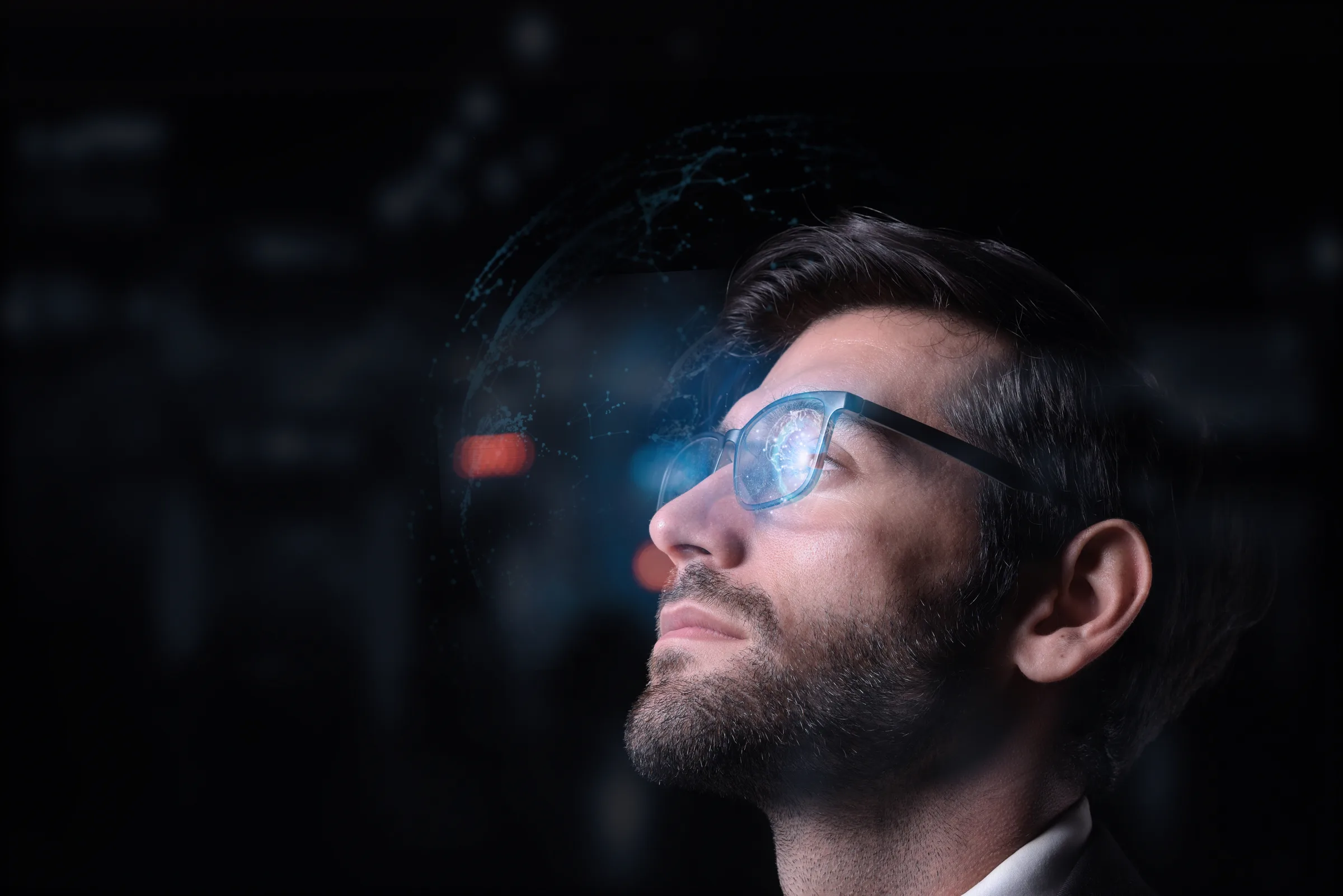
Every new class of personal technology has come with a privacy panic, and most of the panics have faded. Camera phones were going to end changing-room modesty. Location services were going to let stalkers track you. Smart speakers were going to listen to everything. In each case the technology won, partly because the fear was overstated and partly because we stopped noticing. The industry is counting on that pattern holding for the next wave: glasses, pins, pendants and recorders that watch and listen all day so that an AI can be useful. A Reuters analysis published on Monday suggests the pattern may not hold this time, and it is worth understanding why.
What Reuters found
Reporters Aditya Soni and Kenneth Li surveyed the companies betting that AI devices will usher in a post-smartphone era and found them fighting the same headwind. The backlash has been strongest against Meta's Ray-Ban glasses, which made the category mainstream by pairing EssilorLuxottica's frames with Meta's AI. The glasses have drawn privacy lawsuits, users worried about covert recording, and restrictions at several UK venues, including the pub chain Wetherspoon. Reuters reports that Meta plans to introduce camera-free glasses at its Connect conference, a tacit admission that the camera is the problem.
The most striking detail is a lawsuit alleging that Meta used human annotators to review footage captured by the glasses, including recordings of people "changing clothes, using bathrooms and handling financial information". Lawyer Ryan Clarkson, who brought the case, told Reuters that "no reasonable consumer who was promised privacy could ever have concluded these devices would intentionally or inadvertently capture them in their most private moments". Meta's response, per the report, is that an always-on indicator light and the ability to disable the camera protect the privacy of people nearby. The allegations have not been tested in court.
The rest of the industry is designing around the fear. Samsung, which is entering the market with the eyewear brands Gentle Monster and Warby Parker, told Reuters that "the winning form factors will be the ones that make interaction more natural, useful and trusted". Even Realities, founded by a former Apple Watch engineer, sells glasses with no camera at all; its founder Will Wang said consumers "increasingly associate smart glasses with covert recording" and that cameras should wait until stronger safeguards exist. Pocket sells a recorder that clips magnetically to a phone and only records when a button is pressed, with 170,000 devices in use. Plaud, whose recorders announce themselves with a light or an audio alert, claims 2.5 million users and more than $100 million in annual recurring revenue.
The person who never clicked "agree"
Here is what makes this round different from the camera phone. A phone is a tool you point. Taking a picture is a visible act, and everyone in the room understands the gesture. A camera in a pair of glasses is a tool that points wherever you look, and looking at someone is not a gesture that asks permission. The industry's word for the people caught in that gap is "bystanders", which is a polite way of saying everyone who is not the customer.
Privacy law, and privacy design, have been built almost entirely around the customer. You accept the terms. You choose what to share. You can request your data and delete your account. None of that reaches the stranger at the next table, who has no account to delete and no terms to reject. As the analyst Jitesh Ubrani put it to Reuters, "as a society, we want to make sure there's consent and awareness when people are being recorded". The trouble is that our tools for consent were built for a world where the recorder had to hold something up.
The industry has been here before. Google Glass, launched to developers in 2013, produced the word "Glasshole", bans in bars and cinemas, and a consumer retreat within two years. The lesson the industry drew was that the product looked strange and was too early. The lesson it might have drawn is that people objected to being on the wrong end of it. A decade on, the frames look like ordinary Ray-Bans, which solves the first problem and makes the second one worse.
The fixes on offer, and what each one actually protects
Approach | Who is using it | Protects the wearer? | Protects the bystander? |
|---|---|---|---|
Indicator light | Meta Ray-Ban, Plaud | No | Only if they see it, know what it means, and it cannot be covered |
Press-to-record | Yes: nothing is captured by accident | Partly: recording becomes a visible act again | |
No camera | Even Realities; Meta reportedly to follow | Yes | Yes for images; microphones remain |
On-device processing | Advocated by OpenAI's Sam Altman; rare in shipping products | Yes: data never leaves the device | Reduces the harm of a leak; does not stop the recording |
Venue bans | Wetherspoon and other UK venues | No | Yes, inside the venue; unenforceable when frames look ordinary |
Read down the last column and a pattern appears. Almost every measure protects the buyer well and the bystander weakly. The one that protects the bystander best, removing the camera, is the one that removes most of what the product was for. That is not a design failure; it is the shape of the problem. The value of an always-on device comes from the information it takes in, and most of that information belongs, in any ordinary sense, to other people.
Where the law is, and where it is not
Regulators are not absent, but they are aiming at a different target. Data protection law in the UK and Europe regulates the company that processes the footage, and a domestic user filming for their own purposes usually falls outside it altogether. The EU's AI Act restricts real-time biometric identification in public spaces, with exceptions, but says little about a private individual's glasses simply recording a street. In the United States, Illinois has a biometric privacy law with teeth, and it has produced large settlements over face data, but most states have nothing comparable. Two-party consent rules for audio recording exist in some jurisdictions and are widely ignored in practice.
The gap, in other words, is exactly where the bystander stands: a private person, recorded by another private person, with the footage then shipped to a company that may or may not train on it. The Meta lawsuit matters because it tests whether the company's promises to its own customers extend, in any enforceable way, to the people those customers filmed. If the answer is no, the only protection left for the rest of us is social, and social protection is what the ordinary-looking frames are designed to slip past.
What would actually earn trust
None of this means the category is doomed. It means the industry is going to have to do something it has historically avoided, which is design for people who are not its customers. A few things would help, and none of them is exotic. A recording signal that is standardised across brands, so that a red light means the same thing on every face. Hardware shutters rather than software toggles. Local processing by default, with the cloud as an opt-in, which is what Mr Altman was describing. Clear rules on whether bystander footage can be used to train models, with the default being no. And venue policies that owners can actually enforce, which probably means the devices themselves have to announce their presence.
The smartphone camera did eventually win public trust, and it did so partly because the shutter sound, the raised arm and the visible screen turned photography back into a public act. Glasses that look like glasses erase all three signals at once. Until the industry replaces them with something, it will keep meeting the same objection in the same pubs, and it will keep mistaking a question of consent for a question of form factor.




Comments
Sign in to join the conversation.