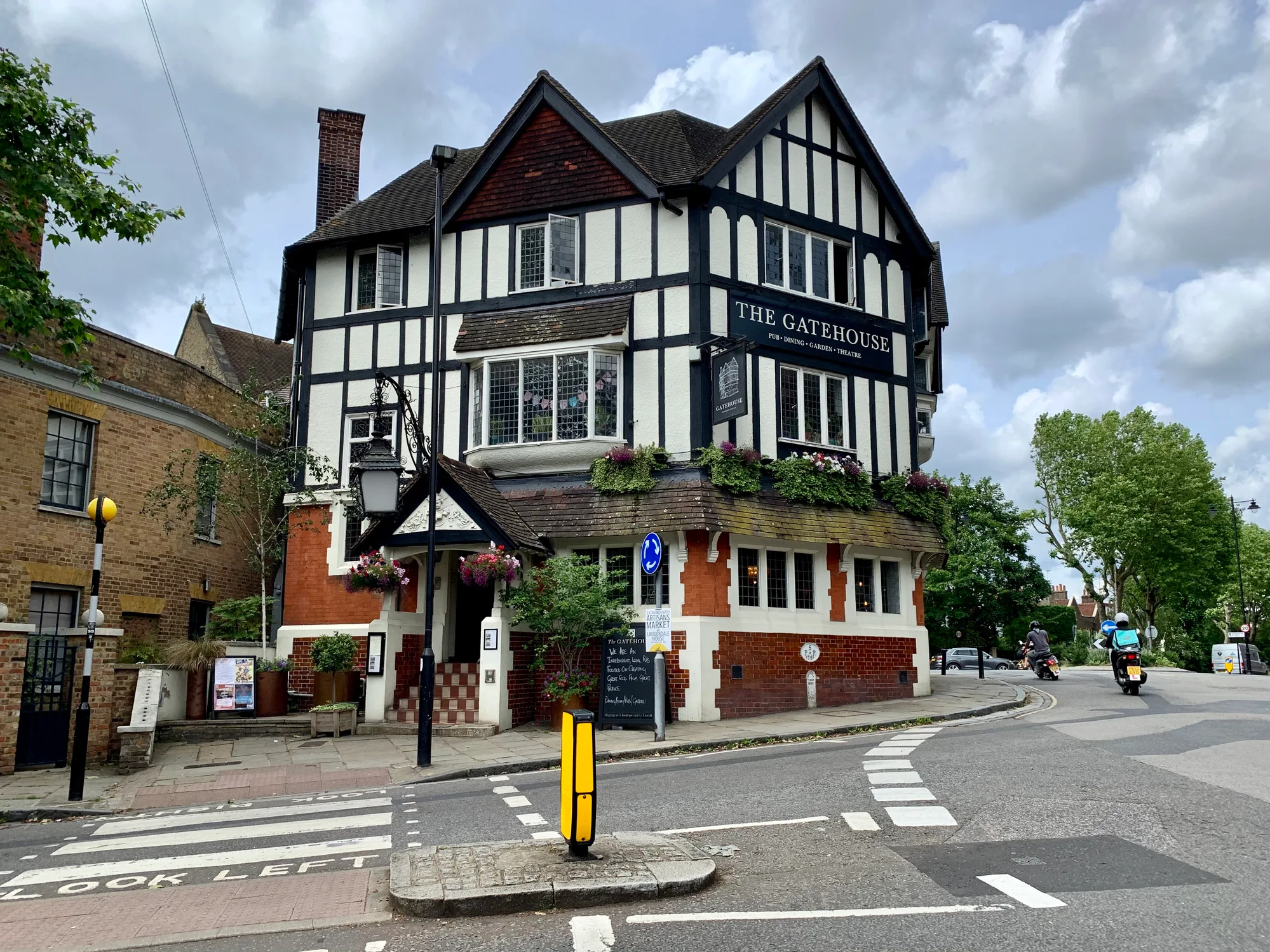
Shortly after eight o'clock this morning a girl walking to school was hit by a car on North Road in Highgate, a few yards from the main site of Highgate School. She was 16 and in Year 12. She was pronounced dead at the scene. The driver, a man of 68, stayed at the scene and was arrested on suspicion of causing death by careless driving. The school said the loss of "such a young life, so full of promise and hope, is deeply heartbreaking", and asked for its community to be supported as it mourned her.123
That is all that is known about what happened, and this piece does not try to add to it. It asks a different question, one that is already being asked in Highgate and will be asked more loudly in the weeks ahead. Highgate School is one of the country's best-known private schools, with fees above £32,000 a year. Do councils, which spend public money on making roads safe outside schools, treat a private school's pupils as somebody else's problem?2
What councils actually do for schools
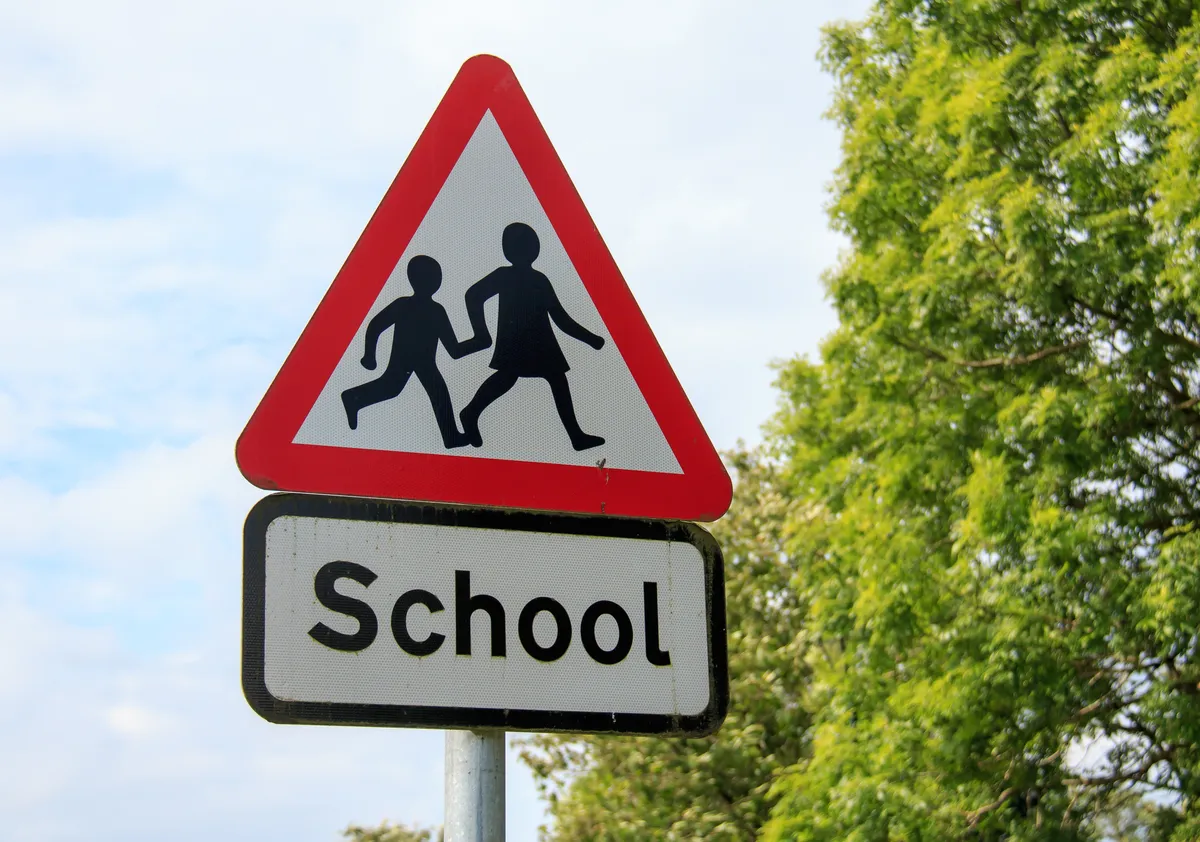
The main thing a London council does for road safety at the school gate is a School Street: a timed ban on motor traffic on the road outside the school at drop-off and pick-up, enforced by cameras, with exemptions for residents. London has more than 800 of them, covering nearly 30 per cent of its schools, and the Mayor wants 1,000 by 2030. Haringey, the borough that covers North Road, had 34 School Streets serving 42 schools and nurseries by April 2025 and was consulting on 16 more.126
So the test of the discrimination claim is simple: do private schools get School Streets? In Haringey they do. The council's published list of existing School Streets includes SS09, Bishopswood Road, operating from 8am to 9.15am and 3pm to 4.30pm on school days, for Highgate Junior School, which is part of Highgate School. The cabinet paper that set up the programme in 2020 lists "The Highgate Junior School (independent school)" in its first batch, alongside Highgate Primary, a state school a few hundred metres away. Across the border in Camden, the Healthy School Streets list includes South Hampstead High School, North Bridge House, Southbank International and the Collège Français Bilingue, all fee-paying. The government's own guidance to councils on setting up School Streets, published last November, says nothing about school type at all. It talks about traffic, community support and whether the road is suitable.4587
Independent schools educate about 6.6 per cent of children in England, and they tend to sit on expensive, well-connected land in the middle of towns. If anything that makes them more likely than average to be on a road a council cannot close. Which brings us to the question that matters.13
The line that does exist: the main road
Highgate's junior school got a School Street because Bishopswood Road is a residential side street. The senior school did not, because North Road is not. It is a classified B road carrying through traffic and buses between Highgate village and the North Hill. The government guidance is blunt about roads like that: "Is the school on a major road or a bus route? … A School Street is unlikely to be feasible where the answer is 'yes'." Haringey's 2020 plan says the same in its own words. Some schools' roads "are not suitable for a timed road closure, and therefore are not school streets", and a further group was "excluded for reasons such as being on unsuitable roads". The council's assessment papers put Highgate's senior site among the independent schools on classified roads.75
That is not a policy against private schools. It is a policy that leaves out every school on a main road, state or private, and it happens to be the roads where the danger is. A 2016 review by the residents' group For Highgate, drawing on council speed surveys, found that "virtually all" collisions in the area happened on its main roads, Archway Road, Highgate Hill and North Hill, and that speeds on Highgate Hill in the early morning ran at 25 to 35mph in a 20mph zone. Roughly 10,000 pupil journeys a day pass through the village to its cluster of schools, which includes Highgate, Channing, St Michael's, St Joseph's and Highgate Primary.9
What residents had asked for
The tools that work on a main road are older and less fashionable than a School Street: enforced speed limits, wider pavements, crossings placed where children actually cross, and build-outs that narrow the carriageway. People in Highgate have been asking for them for a long time. In 2018 a petition to Haringey and Camden about Hampstead Lane, which runs along the other side of Highgate School, asked for speed-activated signs, humps or chicanes, camera enforcement of the 20mph limit and a wider pavement, and named Highgate School, St Michael's, Highgate Primary and Channing as the schools whose children walked the route. The Highgate Society has campaigned for a safer pelican crossing on Highgate Hill outside Channing, where residents report lorries and buses "well in excess of 40mph" and one describes nearly being hit by a car overtaking stationary traffic at the crossing. As recently as May 2024, society members stood on Highgate Hill with a hand-held speed gun because, they said, there were no cameras to enforce the limit.10119
Haringey introduced a borough-wide 20mph limit in 2016. Nobody in Highgate seems to think it is obeyed on the main roads, and the councils do not run speed cameras on them. That is the part of the story that is not about school fees. It is about a limit that exists on a sign and not on the road.9
Where the two boroughs stand
Measure | What the record shows |
|---|---|
School Streets for private schools | Yes. Haringey: Highgate Junior School (SS09). Camden: at least four independent schools. |
School Street for Highgate's senior site on North Road | No. Classified road; the council's programme treats such roads as unsuitable for timed closures, as does national guidance. |
20mph limit on Highgate's main roads | In force since 2016 in Haringey and 2013 in Camden. Residents report routine speeding and no camera enforcement. |
Requests for crossings, build-outs and enforcement | Raised by residents' groups since at least 2016 and by petition in 2018. Progress is partial; the Highgate Hill crossing campaign is ongoing. |
Council statement on today's death | None found at the time of writing. |
The uncomfortable answer
If you wanted to argue that a private school's pupils are treated as second class, the evidence in Haringey is against you. The council put a fee-paying junior school in the first wave of its flagship scheme. If you wanted to argue that a child walking to Highgate School this morning was protected by less than a child walking to a primary on a cul-de-sac in Tottenham, you would be right, and the reason is the road. The measure councils are proudest of, and that the Mayor counts towards a target, is one that by design cannot be used where most children are hurt. What is left for main roads is enforcement and engineering, which is slower, dearer, and politically harder because it inconveniences drivers every hour of the day rather than for 75 minutes twice a day.
None of that says anything about why one girl died on North Road today. That is for the police and, in time, a coroner. It does say what the questions for Haringey and Camden should be when residents ask them, and they will: not whether Highgate School was treated differently, but what has been done since 2016 to make the 20mph limit real on the roads its pupils cross, and what will be done now.

Comments
Sign in to join the conversation.