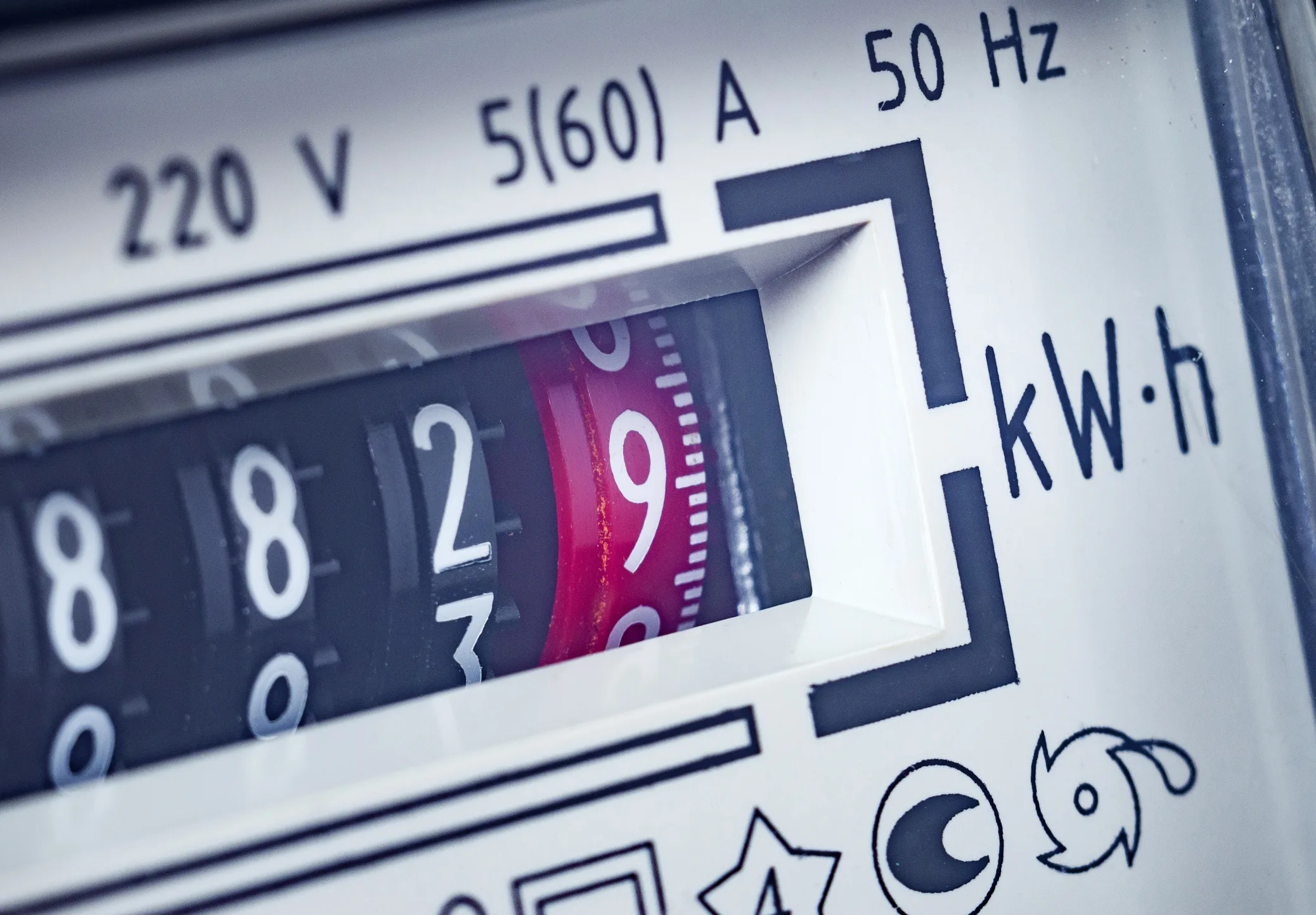
On Thursday the energy price cap changes for the fourth time this year. For the roughly 20 million households in England, Scotland and Wales on a standard variable tariff, that means new maximum unit rates and standing charges from 1 October until 31 December. Ofgem, the regulator, announced the figures on 26 August: a 4% rise, which it describes as £60 a year or £5 a month for a typical home, driven by wholesale gas prices that have been high and volatile since the war with Iran closed the Strait of Hormuz in the spring.1
Four per cent sounds modest, and next to the 13% jump in July it is. But the headline hides three things that matter more than the number: the rise falls almost entirely on gas, the electricity figure is being held down by a temporary tax cut that expires in March, and the forecasts for the January cap have deteriorated sharply in the four weeks since Ofgem spoke. This guide sets out what changes, who it applies to, what it will cost, and what you can do about it.313
The new rates
The cap is not a limit on your bill. It limits what suppliers can charge per unit of energy and per day in standing charges; what you pay depends on how much you use, where you live and how you pay. The figures below are Ofgem's averages across Great Britain for direct debit customers. Regional rates differ, and Ofgem publishes the full tables for each of the 14 regions and each payment method, which are attached to this story.24
Direct debit, GB average | 1 Jul – 30 Sep 2026 | 1 Oct – 31 Dec 2026 | Change |
|---|---|---|---|
Electricity unit rate | 26.11p/kWh (incl. 5% VAT) | 26.32p/kWh (0% VAT) | +0.8% |
Electricity standing charge | 57.19p/day | 54.83p/day | −4.1% |
Gas unit rate | 7.33p/kWh | 7.97p/kWh | +8.7% |
Gas standing charge | 29.04p/day | 29.68p/day | +2.2% |
Typical annual bill | £1,663 | £1,723 | +£60 (+4%) |
Ofgem says the increase reflects an 11% rise in its wholesale cost allowance over three months. Wholesale energy now makes up 47% of the cap, up from 44%, with the gas allowance up 13% and the electricity allowance up 10%. Its explanation is the Middle East conflict, the market's continuing nervousness about liquefied natural gas supply, and a hot summer across Europe that raised cooling demand while low wind and curtailed thermal plants pushed generators back on to gas. Networks make up 24% of the cap, supplier operating costs and bad debt 17%, government policy costs 6% and the supplier profit allowance 2.7%.3
"High international gas prices are continuing to drive energy costs in the UK," said Neil Kenward, Ofgem's director general for markets, when the figures were published. Ofgem notes that prices remain 52% below the peak of the 2022 crisis, when the government stepped in to cap a typical bill at £2,500, but also that, adjusted for inflation, the new cap is 7% higher than the same period last year.1
Why the rise is all about gas
Gas bills under the cap rise by 8%. Electricity bills barely move, and Ofgem is explicit about why: the government has removed the 5% VAT on domestic electricity in Great Britain from 1 October to 31 March 2027, and that cut is built into the new figures. Without it, Ofgem says, the cap would have been about £45 higher. The consequence is that a household with gas central heating gets the full increase, while a home with no gas, such as an all-electric flat or a heat pump household, will see a rise of less than 1%. Because of the VAT change, Ofgem warns that October's electricity figures cannot be compared directly with July's.12
The VAT cut was Andy Burnham's first policy announcement as prime minister, on 21 July, his second day in the job. It costs the Treasury about £850m in 2026-27, is paid for by cancelling the £1.8bn digital ID programme, and is estimated to knock around 0.1 percentage points off CPI inflation. It applies to everyone, including people on fixed deals, and to small businesses, charities and care homes that already qualified for the reduced rate. Any extension beyond March will be decided at the autumn Budget. "I said I wanted to give people breathing space, and that's what I'm announcing on my second day as Prime Minister," Burnham said.89
Martin Lewis of MoneySavingExpert called it a "good totem" while warning that a £45 saving is smaller than a single quarter's movement in the cap and would be eaten by October's rise and January's. That is broadly what has happened: the tax cut has converted a roughly 6% rise into a 4% one.10
The typical household changed in July, and it matters
There is a wrinkle in the headline number that most coverage skips. The cap is expressed as an annual bill for a "typical" household, and in July Ofgem cut its definition of typical use, from 2,700 to 2,500 kilowatt-hours of electricity and from 11,500 to 9,500 kWh of gas a year, to reflect the fact that homes now use about 7% less electricity and 17% less gas than at its last review. That is why the July cap was reported as £1,663 even though rates rose 13%: on the old definition, it was £1,862. On the same old definition, October's cap would be £1,935, higher than any quarter since the start of 2024. Ofgem describes the typical figure as "a presentational tool", but changing it also nudged unit rates up, because suppliers must recover fixed costs across fewer units.15
The dip in April was the government's earlier intervention: from 1 April it stopped charging the Energy Company Obligation through bills and moved three-quarters of the Renewables Obligation cost on to general taxation, worth an average of £150 a year, or £134 on the typical-bill measure. Two quarters of rising gas prices have since more than cancelled that out.7
Who it covers, and who it doesn't
The cap applies to default and standard variable tariffs in England, Scotland and Wales, whether you pay by direct debit, on receipt of a bill, by prepayment meter or on an Economy 7 meter. Ofgem's own account data shows around 20 million households on those tariffs: roughly 12 million paying by direct debit, 5 million on prepayment and 3 million on standard credit. About 11 million households, 35%, are on fixed deals and are unaffected until their fix ends, though they do get the VAT cut. The cap does not apply to heat networks, heating oil, businesses or Northern Ireland.1
Payment method | Jul – Sep 2026 | Oct – Dec 2026 | Change |
|---|---|---|---|
Direct debit | £1,663 | £1,723 | +4% |
Prepayment meter | £1,620 | £1,678 | +4% |
Standard credit (pay on bill) | £1,796 | £1,861 | +4% |
Economy 7, electricity only (3,400 kWh) | £1,039 | £1,046 | +1% |
Prepayment customers now pay the lowest cap rates, about £45 a year less than direct debit, a reversal of the old premium that Ofgem engineered through a "levelisation" allowance. Paying on receipt of a bill remains the most expensive way to buy energy, £138 a year more than direct debit at typical use, because suppliers are allowed to recover higher bad-debt and working-capital costs from those customers.13
Northern Ireland has its own regulated market and is having a worse autumn. SSE Airtricity's regulated gas tariff in Greater Belfast and the West rises by 19.2%, or £174 a year, from 1 October; firmus energy's goes up 8.98% in the Ten Towns area from the same date and 12.5% in Greater Belfast from 8 October. Power NI's electricity tariff is unchanged for now. The Utility Regulator says wholesale gas reached 169p a therm over the past six months, double its pre-conflict level. Nor does the VAT cut apply there: Northern Ireland stays at 5% under the post-Brexit VAT rules, and the Executive receives equivalent funding instead.92223
January is the one to watch
When Ofgem announced the October cap, Cornwall Insight, the consultancy whose forecasts usually land closest to the outcome, predicted a further 9% rise in January to £1,872. Its principal consultant, Dr Craig Lowrey, warned that even a ceasefire would not bring January's bills down because Europe was heading into winter with low gas stocks: a heatwave, a supply disruption in Norway and strong Asian demand had all eaten into storage while Qatar's LNG output remained shut.11
Four weeks on, the picture is considerably worse. Wholesale gas spiked again in September after renewed attacks in the Gulf, and the suppliers' own forecasts, which are updated weekly, now point to a January cap above £2,100: British Gas put it at £2,135 on 21 September, EDF at £2,098 on 22 September and E.ON at £2,131, all with what British Gas labels "very low" confidence. MoneySavingExpert's average of the forecasts is a rise of about 23%. On the old typical-use definition that would take the cap back above £2,300, a level last seen in the summer of 2023. The European Commission's gas coordination group said on 3 September that storage was lower than in previous years but that there was "no immediate risk" to supply; it was due to meet again this week.12131525
Forecasts this far out move with every day's trading, and a durable reopening of the Strait of Hormuz would change them quickly. Ofgem will set the January cap in late November. But the direction of travel explains why the October rise has attracted so little alarm: for most households it is the smaller of two increases this winter.13
Should you fix?
In August, Ofgem said fixed deals were available at £100 or more below the October cap, and at the time that was true. It no longer is. By 24 September, the cheapest fixes on MoneySavingExpert's comparison were priced above the October cap, not below it: Fuse's 24-month fix at 1.4% more, E.ON Next's at 1.6% more and Outfox's 18-month deal at 3.2% more, each with exit fees of £50 to £100 per fuel. Suppliers price fixes off the wholesale curve for the months ahead, and that curve now includes a January cap of £2,100 or so.114
That changes the calculation. A fix that costs slightly more than the October cap is still cheaper than the forecast January cap, which is why MoneySavingExpert's current view is that for most people on the cap "just grabbing a cheap fix now is the sensible risk-averse option", with a preference for deals with low exit penalties in case prices fall. The case against fixing is that today's rates are high by any historical standard and could look poor in a year if the conflict ends. Nobody can tell you which way that goes; what a fix buys is certainty, at a price that is currently a little above the cap and well below the forecast.14
Three smaller things are worth doing regardless. Submitting a meter reading on or around 30 September stops your supplier estimating how much of your usage fell under the new, higher gas rate. If you pay on receipt of a bill, switching to direct debit saves a typical £138 a year, and prepayment is cheaper still. And Ofgem points out that many suppliers now offer cheaper off-peak electricity to smart-meter customers, which suits anyone who can run a dishwasher, washing machine or car charger overnight.13
Help if you cannot pay
Household energy debt is at a record. Ofgem's latest indicators put total domestic debt and arrears at £5.02bn at the end of June, up 4.8% on the previous quarter and 13% on a year earlier, with about 1.2 million electricity accounts in arrears and no repayment plan. Average arrears for those customers reached £1,872 for electricity and £1,613 for gas, the highest recorded. The debt-relief scheme Ofgem announced last October, which would write off up to £500m for around 195,000 households on means-tested benefits who fell behind during the 2022-24 crisis, was due to start its first phase early this year; the charity StepChange this week urged the government to get it moving, saying its polling found 29% of adults worried about paying for energy over the next six months.161718
The main support this winter is the Warm Home Discount, a one-off £150 credit on electricity bills in England, Scotland and Wales. For 2026-27 the two "core groups" have been merged into one: anyone who on 23 August 2026 was receiving Pension Credit, Universal Credit, Housing Benefit, income-related ESA or another qualifying means-tested benefit should get it, and the previous "high cost to heat" property test no longer applies. Most eligible households are identified by data matching and credited automatically; the government will write to people between late October and the end of December, and some will be asked to call a helpline to confirm details. Northern Ireland has a separate Affordable Warmth scheme.1920
Pensioners in England, Wales and Northern Ireland get the Winter Fuel Payment again this year, £200 for households where the oldest person is under 80 and £300 where someone is 80 or over, paid in November or December. It goes to everyone of state pension age, but HMRC claws it back through the tax system from anyone whose own income is above £35,000. Scotland pays a Pension Age Winter Heating Payment instead. Beyond that, Ofgem's advice to anyone struggling is to contact the supplier before missing a payment: suppliers must offer an affordable repayment plan, and can provide emergency credit on prepayment meters. Disconnection for non-payment has been at zero since 2023.21621
What happens next
Three dates. Ofgem announces the January cap in late November, and unless wholesale prices fall in the meantime that will be the number that defines this winter. The autumn Budget will decide whether the electricity VAT cut ends on 31 March as planned, which would add the £45 back at exactly the point spring bills would otherwise be falling. And from April 2027 Ofgem is adding a new allowance to fund the government's Bill Discount Scheme for households living near new or upgraded electricity pylons, a small cost spread across everyone else.38
The bigger question is one this cap cannot answer. Britain's bills track the world gas price because gas heats most homes and sets the electricity price on most days. Until that changes, a regulator can only pass the cost through every three months and a chancellor can only decide who bears it. On Thursday, for the second quarter running, the answer is: gas users, a little more than before.3

1 comment
Sign in to join the conversation.
So the cap went up but its not comparable to last years number because they changed the basis. Great, very helpful ofgem