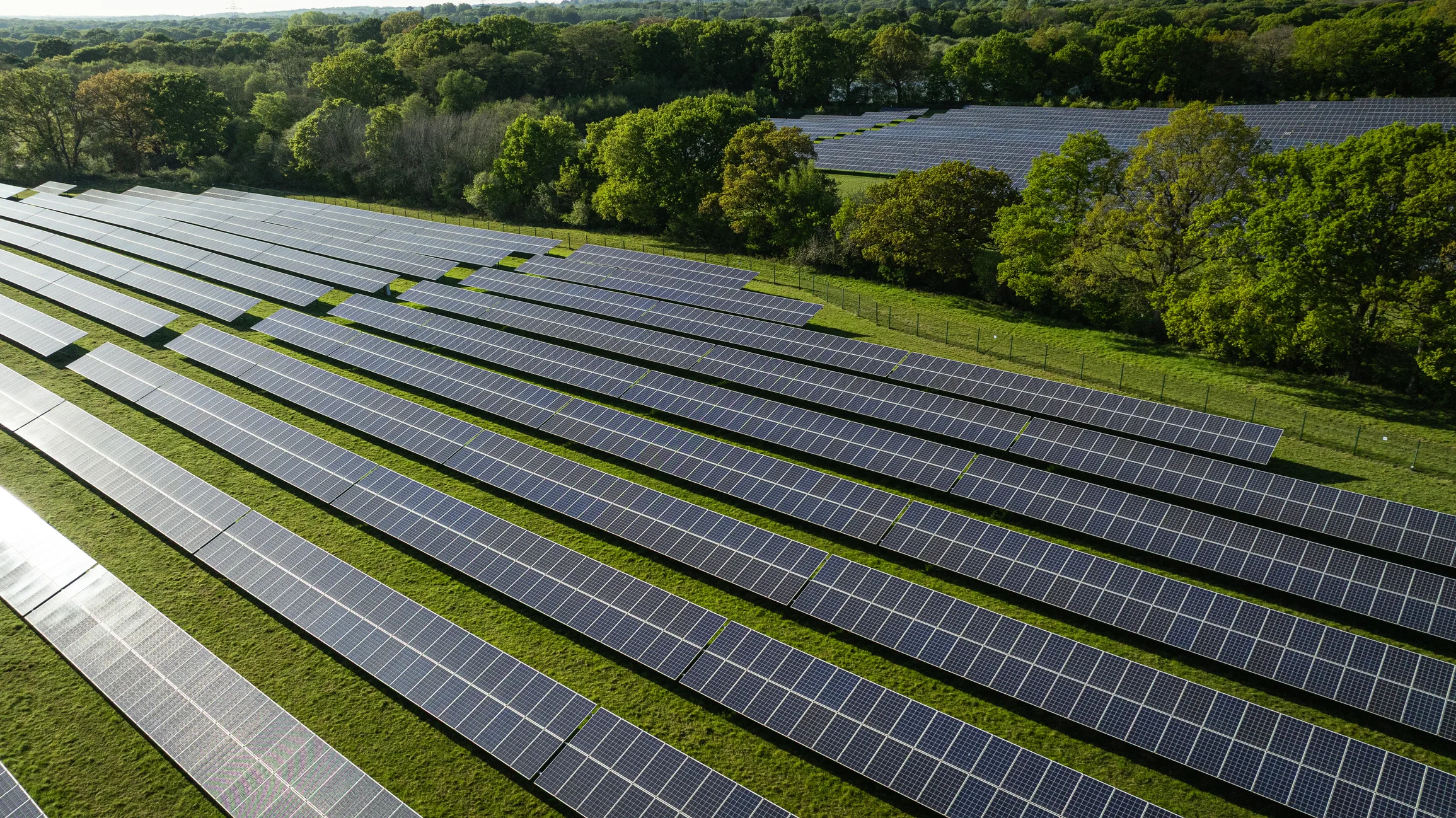
For most of its history, the story of solar power was a story about cost. Panels were an expensive way to make electricity, then a merely pricey one, then — somewhere in the last decade — the cheapest source of new generation ever built in most of the world. That story has largely finished. The interesting questions now are different: how much better can the cell itself get, and what happens when a grid is flooded with power that arrives all at once, at noon, whether anyone wants it or not.
How cheap is cheap
Industry trackers put the price of a standard silicon module at a few cents per watt at the factory gate — a figure that would have looked like a typo in 2010. The drop came from scale: Chinese manufacturers built factories the size of towns, learned faster than anyone expected, and then overbuilt so aggressively that prices fell below the cost of production for stretches of 2024 and 2025. Several producers lost money on every panel they shipped.
The consequence is that the panel is now a minority of the cost of a solar farm. Land, steel, labour, inverters, cabling and — above all — the grid connection dominate. Making the cell 10 per cent cheaper barely moves the total. Making it 10 per cent more efficient does, because every other cost is spread across more watts.
The tandem: the first real change in the cell for decades
A silicon cell converts at most about 29 per cent of sunlight into electricity, and commercial panels sit in the low-to-mid twenties. That ceiling is physics, not engineering: silicon can only use part of the spectrum efficiently. The way round it is to stack a second material on top that harvests the light silicon wastes. Perovskites — a family of crystalline materials that can be printed as a thin film — turned out to be almost ideal for the job.
Perovskite-on-silicon tandem cells have gone from a curiosity to certified lab records in the mid-thirties, per cent, in under a decade, and the first commercial tandem modules have shipped in small volumes. If those numbers hold up in mass production, it is the largest efficiency jump the industry has ever had.
That caveat is the whole story. Perovskites degrade: heat, moisture and even light itself break the crystal down, and early cells lasted hours rather than years. The research effort of the last few years has been less about efficiency than about encapsulation, additives and cell architectures that stop the decay. Lab lifetimes are now measured in thousands of hours under accelerated testing, which is impressive and still not the same as a quarter of a century on a roof in Arizona. The manufacturers' warranty, not the record chart, will tell you when the technology has arrived.
Where each technology stands
Technology | Commercial module efficiency | Status |
|---|---|---|
Silicon (TOPCon, HJT) | Roughly 22–24% | The workhorse; the vast majority of what is installed |
Thin-film (cadmium telluride) | Roughly 19–20% | Mature niche, strong in US utility projects |
Perovskite-silicon tandem | Mid-to-high twenties in first products; lab cells in the mid-thirties | Early commercial; durability being proven |
All-perovskite and flexible film | Lab only | Promising for weight-limited uses; years away |
Figures are approximate ranges drawn from manufacturer datasheets and the NREL efficiency chart; check the sources for current records.
The quieter breakthroughs
Not every advance is a new material. Wafers have got thinner, saving silicon and energy. Panels now collect light from both faces, picking up what bounces off the ground. Trackers tilt them through the day. Robots install them faster than crews can. Agrivoltaics — panels spaced above crops — turns a land-use fight into a shared use. And floating arrays on reservoirs sidestep land altogether while cutting evaporation. None of these makes headlines; together they have cut the cost of a finished solar farm as much as any cell chemistry has.
The constraint that is not the panel
Here is the problem with something that is cheap and abundant at noon: at noon, everybody has it. Wholesale electricity prices in sunny regions now routinely fall to zero or below in the middle of the day, which means the next panel earns less than the last. Projects wait years for a grid connection. Storage — batteries, mostly — is the obvious answer, and battery prices have followed the same curve panels did, a decade behind. The future of solar is therefore less about a better cell than about pairing it with storage, moving demand towards daylight, and building the wires.
That is a duller sentence than "scientists break efficiency record", and a more important one. The breakthrough that decides how far solar goes will probably not happen in a lab. It will happen in a planning office, a substation, and a battery warehouse.



Comments
Sign in to join the conversation.