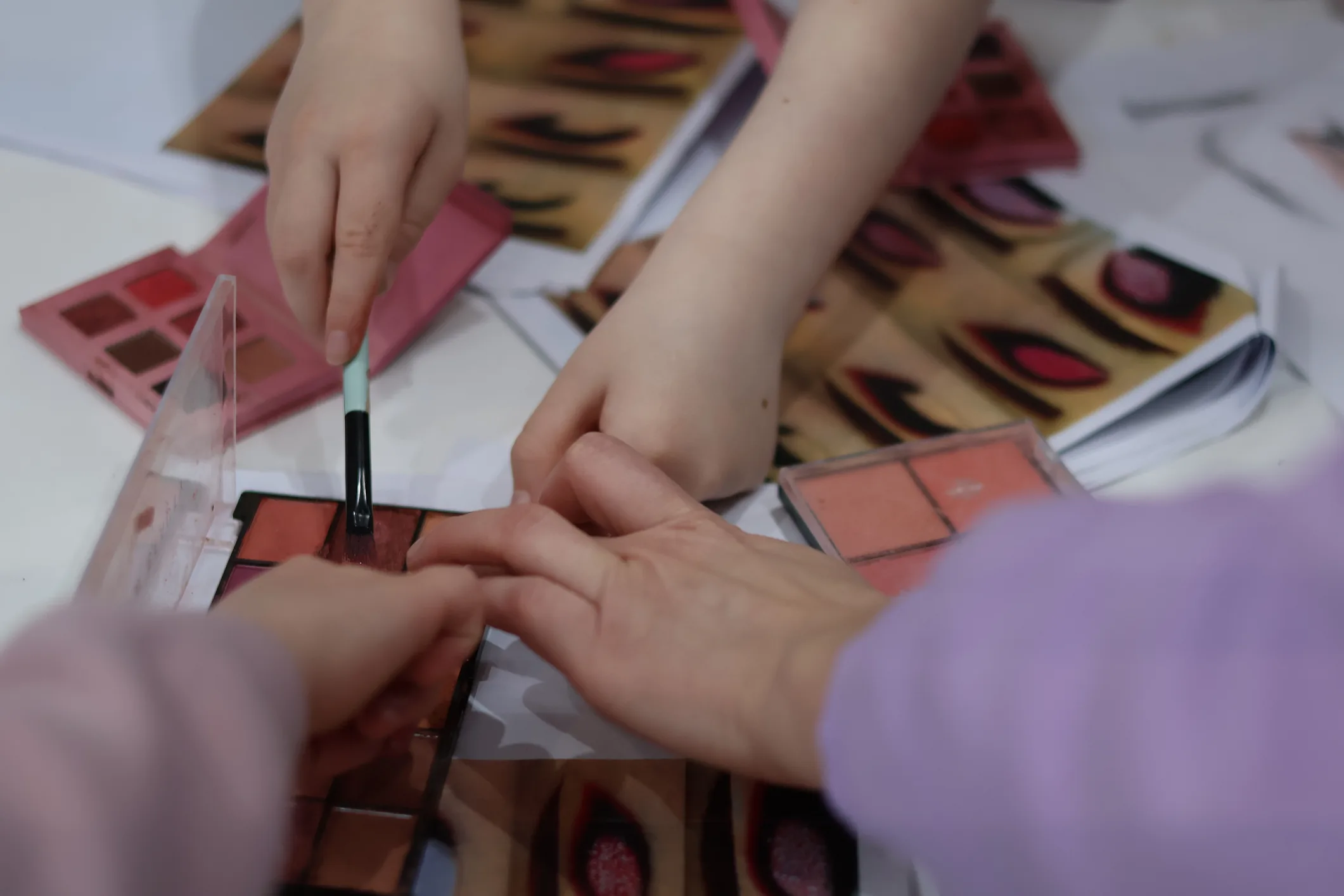
Somewhere in Britain this morning a child of eleven applied a serum containing glycolic acid, a moisturiser with peptides, a toner with salicylic acid and a body mist with nine named allergens, in that order, because a video told her to. Her parents paid about £90 for the four. Nothing on the bottles says she should not. Nothing in the law says so either. This piece is about the gap between those two facts: what is actually in the products children are buying, what the safety system catches and what it does not, where the rules on age and ingredients stand in Britain against Europe, and who, if anyone, is checking.
What the law says about children
The UK Cosmetics Regulation is the European regulation of 2009, kept after Brexit and amended for Great Britain. It requires every product to be "safe for human health when used under normal or reasonably foreseeable conditions of use", to be assessed before sale by a qualified safety assessor, to be notified to the Office for Product Safety and Standards, and to carry a full ingredient list. It restricts or bans about 1,700 substances. It mentions children once in a way that matters. Annex I, which sets out the safety report, says: "There shall be inter alia a specific assessment for cosmetic products intended for use on children under the age of three and for cosmetic products intended exclusively for use in external intimate hygiene." The regulator's own guide repeats the point and adds nothing: the extra assessment is for under-threes. There is no minimum age of purchase, no category for products used by older children, and no duty to consider a child user unless the product is "intended" for one.125
Toy make-up sits on a second law. A play make-up kit is a toy under the Toys (Safety) Regulations 2011, which say that "cosmetic toys, such as play cosmetics for dolls, must comply with the compositional and labelling requirements" of the cosmetics regulation, ban a list of allergenic fragrances from toys, and allow some in "cosmetic kits" only with the warning "Contains fragrances that may cause allergies" and not for children under 36 months. The seam between the two laws shows in the alerts: a nail-art kit refused at the border in June 2025 was recorded as failing both.621
What is on the shelf
To see what children are actually using we read the published ingredient lists of 1,436 products on sale at Lookfantastic, Cult Beauty and Space NK and on the websites of brands associated with the trend, 1,218 of them with a full list, on 3 October. Each list was checked for retinoids, the alpha-hydroxy acids glycolic, lactic and mandelic, salicylic acid, polyhydroxy acids, vitamin C, niacinamide, fragrance, the 26 allergens a label must name, essential oils, denatured alcohol and sunscreen. Boots, Superdrug and Sephora's own pages could not be read by our tools and Bubble, an American brand popular with tweens, could not be crawled; what we have is the ranges those retailers also stock.48
The result is not that children's skincare is full of retinol. Retinoids appeared in 15 of 1,218 products, and none of them was from the brands tweens favour; the Inkey List's three retinol serums, at £13 to £18, are the cheapest and most teen-adjacent. The acids are the story. Of Drunk Elephant's 53 products, 20 contain an alpha-hydroxy acid and six salicylic acid; its Babyfacial mask, £72, is a 25% acid peel. Of Byoma's 40, which sell for £10 to £22 and are marketed on "barrier" skincare, 19 contain an alpha-hydroxy acid. Glow Recipe's toners and serums pair salicylic with polyhydroxy acids. Across the 470 products from brands positioned at or popular with tweens, teenagers and Generation Z, 67, one in seven, contain a retinoid or an exfoliating acid, against one in fifteen among products positioned at adults. Added fragrance is the other difference: 26% of the youth-positioned products list parfum, against 15%, driven by body mists. Sol de Janeiro's 63 products include 31 with parfum and 27 that name at least one of the 26 allergens; Glossier names allergens in 10 of 34.48
None of this is hidden. The ingredient is on the label, as the law requires. What is absent is any statement of who the product is for. Among the 1,218 listings, two carried a minimum age for the user, both acne spot treatments: a benzoyl peroxide gel for "over 12 years of age" and a salicylic spot wand "suitable for 13+". The rest of the age statements were "not for children under 3" on play make-up and the standard instruction to keep babies out of the sun on sunscreens. No listing for an acid toner, peel, serum or retinol carried an age. The guidance does exist; it is just not where the product is sold. Drunk Elephant's own FAQ page says: "not every product in our line should be used by younger fans, 12 and under. In general, we do not recommend using products containing high concentration of active ingredients, which address concerns that aren't present at such an age." It then lists 16 products that under-13s "should not use due to their very active nature", including Babyfacial, the Framboos night serum, the glycolic body lotion and the Protini serum, and says teens "can use any product in the Drunk Elephant line". Not one of the Lookfantastic, Cult Beauty or Space NK listings for those 16 products repeats it. The trade body's advice to parents, published last December with a consultant dermatologist, is that a child needs a cleanser, a moisturiser and sunscreen and should "avoid products marketed with cosmetic benefits such as 'radiance boosting' or 'anti-ageing', which are unnecessary and may irritate young skin". The products above are sold on exactly those words.484932
What the doctors say
The dermatology literature has caught up with the trend in the last two years and its conclusion is consistent. A 2025 review of the "Sephora Kids" phenomenon in the Journal of Drugs in Dermatology examined retinol, exfoliating acids and vitamin C and found that "these ingredients have not been thoroughly tested in children. Consequently, using these products without medical supervision can pose risks such as skin redness, irritation, heightened sun sensitivity, dermatitis, and other potential adverse effects." A two-part review in Pediatric Dermatology the same year found that "many of the common ingredients in cosmeceutical products have had very limited (if any) studies conducted in pediatric populations". A survey of 168 Dutch dermatologists published in May 2026 found 88% "regularly encountering skincare-related skin problems, most commonly irritant eczema, perioral dermatitis, allergic contact dermatitis", with "retinoids, exfoliating acids, fragrances, and products marketed as natural" the ingredients most often blamed. In the Lords in November 2024 a peer cited the British Association of Dermatologists "warning of irreversible skin problems due to the growing trend of children as young as eight using anti-ageing skincare products they had seen on TikTok and YouTube".34353640
The evidence has a limit the piece should state. Nobody has run trials of these ingredients on children, so the warnings rest on adult data, case reports and clinical experience, and the industry disputes the premise that children's skin is more permeable: the trade body's own FAQ says babies are "born with skin which is very nearly complete in its barrier function", while a 2026 paediatric pharmacology review says the opposite. What is not disputed is the allergy mechanism. The EU's scientific committee puts contact allergy to fragrance at 1 to 9% of the population and describes it as "a life-long, altered specific reactivity": once sensitised, a much lower dose triggers eczema. Sensitisation is for life, and it happens on exposure.33379
What Europe did and Britain did not
In April 2024 the European Commission restricted retinol, retinyl acetate and retinyl palmitate to 0.05% in body lotion and 0.3% in other products and required every product containing them to say "Contains Vitamin A. Consider your daily intake before use". Products that do not comply could not be placed on the EU market from 1 November 2025 and cannot be sold from 1 May 2027. The basis was not children's skin but total intake: the scientific committee found that the 5% of the population who consume most vitamin A from food and supplements may already exceed the safe upper limit, and cosmetics add to it. Separately, from July 2026, 56 more fragrance allergens must be named individually on EU labels, on top of the 26 that have been named since 2005.789
Great Britain, which now amends its own copy of the regulation, has adopted parts of the same package. It copied the EU's kojic acid limit in December 2024 and the ban on the UV filter 4-MBC from July 2026, and it has written its own child-specific limits for two salicylates. It has not adopted the retinol limit, the vitamin A warning or the expanded allergen list: the Annex III in force in Britain has no entry for retinol. The regulator's call for data on cosmetic ingredients was updated on 24 October 2024 to request "scientific information" on vitamin A, and its advisory group's workplan for 2026 lists vitamin A and salicylic acid. The group has published 26 opinions; none is on either. In 2025/26 it published one. Asked about fragrance allergens, ministers have said the existing 26-name rule "help[s] people identify and avoid those products which they may be allergic to" and that "the current restrictions are sufficient".3101112131415164142
The acid the tween brands use most is also under review, and only in Europe has anyone finished. The EU's scientific committee concluded in 2025 that salicylic acid, used for anything other than preserving a product, "is not safe" for children aged three to ten at 2% in face moisturisers and other products once their total exposure is added up, and that "reducing the concentration, for example to 0.1% in dermal products, would make the use safe". Its scope stopped at age ten. In Britain salicylic acid is item three on the advisory group's 2026 workplan, below two parabens.3815
Measure | European Union | Great Britain |
|---|---|---|
Retinol limit and vitamin A warning | In force: new products from 1 Nov 2025, all sales from 1 May 2027 | Not adopted; data requested Oct 2024; on 2026 workplan |
56 additional fragrance allergens named on labels | New products from 31 Jul 2026, all sales from 31 Jul 2028 | Not adopted; 26 allergens named |
Kojic acid 1% limit | In force | Copied, Dec 2024 |
4-MBC sunscreen filter ban | In force | Copied, Jul 2026 |
Minimum age for sale or use | None | None |
Child-specific safety assessment | Under-threes only | Under-threes only |
What the alerts catch
If the suitable-for-children question is not asked, the unsafe-for-anyone question is, and the record of what it finds is public. The EU's Safety Gate has logged 5,600 alerts for cosmetics since 2015, and cosmetics have been its most-notified category for three years running: 36% of all alerts in 2025. The UK's own database tells the same story: cosmetics were the most notified product category in 2025/26, 833 products or 25% of the total, ahead of toys. But three quarters of the European alerts since 2015, 4,228, are one thing: perfumes still containing Lilial, a fragrance ingredient banned as toxic to reproduction in 2022, mostly notified by Italy. Strip those out and the series is flat at under 150 a year until 2025, when a new ban on a gel-nail ingredient produced 239 alerts. Beyond those two waves the substances are the old ones: hydroquinone and mercury in skin lighteners, lead, preservatives, contamination.25261727
Children's cosmetics are a sliver of this. Of the 5,600 alerts, 105 concerned a product described as for children, babies or girls, or as a toy: 32 perfumes, 19 skincare and body products, 15 make-up or face paint, 13 hair products, nine sunscreens. The substances were Lilial in 42, microbial contamination in 20, lead in seven, isothiazolinone preservatives in six, missing ingredient lists in six. Eighteen came from China, 17 from Italy, 13 from Spain. The British list is shorter and similar: since 2021 the UK regulator has issued 252 alerts for cosmetics and toy cosmetics, 183 of them for cosmetics, and those are dominated by corticosteroids and hydroquinone in skin-lightening creams, 54 and 50 alerts, with Lilial and mercury behind. The children's cosmetics among them are nine: a toy make-up kit recalled in August 2025 for isothiazolinones, a Halloween make-up set with nickel in 2024, an LOL Surprise nail set with the same preservative in 2022 and an LOL cosmetics tin in 2023 for an undeclared allergen, a Disney Frozen bath bomb set with phthalates in April 2026, a mermaid bath bomb with Lilial, a children's detangler with microbial growth, a foaming soap that was flammable, and a baby powder containing asbestos. Where a seller is named it is eBay, Amazon, TK Maxx, Argos or AliExpress.25212223
The one tween-brand alert on the British file proves the point in reverse. In August 2026 Trading Standards rejected an import of Bubble sunscreen packs at the border because "multiple mandatory cosmetic labelling requirements have not been met": no ingredient finding, a paperwork failure on a product made in the United States. The products that dermatologists worry about pass; the products that fail are £3 make-up kits and bath bombs with cartoon characters on the box.24
Who checks
The checking is real and it is targeted elsewhere. The regulator triaged 115 reports of serious undesirable effects from cosmetics in 2025/26, up from 69, and received 325,496 product notifications; its border teams checked 11.3 million goods and found 2.7 million unsafe or non-compliant, "including unsafe e-bikes, toys, cosmetics, baby products and electrical products". Its own laboratories tested teeth whiteners and skin-lightening creams. Local Trading Standards officers, who choose what to buy by risk, test-purchased 183 cosmetics in 2024/25 and found 168 non-compliant; the regulator warns these figures "cannot be used for national estimates" because the samples were picked to fail. No programme has test-purchased tween skincare, and there would be little point: the products comply.161819
The law's teeth are for unsafe products, not unsuitable ones. Under the 2013 enforcement regulations, selling a cosmetic that breaches the safety, assessment, ingredient or labelling rules carries a fine of up to £20,000 or twelve months in prison on indictment, and the recalls above are the result. The weak point is where children buy: the marketplaces. Ministers have said "it remains too easy for non-compliant products to be made available to UK consumers on online marketplaces", the Product Regulation and Metrology Act 2025 gives them power to put duties on anyone who "controls access to an online marketplace", and a consultation on those duties closed on 23 June 2026 with the response due "in due course". The same Act lets ministers treat a product as compliant if it meets a specified EU rule, which is the lever that could import the retinol limit in an afternoon.4504543
The two bodies that could address the marketing have not. The Advertising Standards Authority's code bars advertising "cosmetic interventions" to under-18s and then says: "This does not include cosmetic products as defined in Regulation (EC) No 1223/2009." Its rules on children forbid direct appeals to buy and exploitation of credulity, and its rulings database contains no ruling on retinol, on children's skincare, or on any of the brands above. Parliament has not held a debate or asked a written question on the subject; it surfaces only as asides in debates about phones and social media, as when a Labour MP asked in March 2025 why "high-strength retinols and hyaluronic acids are being marketed to" young girls: "why on earth are eight-year-olds using them?" The government's answer to harmful beauty trends is the planned ban on social media for under-16s. A Commons committee inquiry into the safety and regulation of beauty products took evidence from the regulator and a minister in June 2026; its report is awaited.282930394420
Where movement exists it is private. The Cosmetic, Toiletry and Perfumery Association, the industry body, published "SkinCare Simplified: A Parent's Guide" on 2 December 2025 and "clearly reiterates its position that anti-ageing products or complex routines should not be used on young people's skin as they are not designed for this purpose". Its survey of 2,000 parents of 8 to 14-year-olds found 85% now discuss skincare with their child, 42% "admit their child knows more about skincare than they do", and 78% think anti-ageing products are unnecessary for children, risky or pushed by social media. In Sweden the pharmacy chain Apotek Hjärtat has put an age limit on "advanced skincare" after its survey found 15% of girls aged 10 to 18 had used acids, retinol or enzyme peels in the past year. In California two bills to bar anti-ageing products containing vitamin A or acids to under-13s and then under-18s both died in committee. No British retailer has announced an age policy that we could find.314647
What this can and cannot tell you
It can tell you what is in the products, from the labels: that among the brands children buy, acids and fragrance are common, retinol is rare, and no listing says who the product is for. It can tell you that the law has no age in it beyond three, that Britain has declined for two years to follow Europe on retinol and allergens, and that the alert system is busy with banned perfume, skin lighteners and toy make-up rather than with anything a dermatologist is worried about. It cannot tell you concentrations, which brands rarely publish, or how many children have been harmed, because nobody counts; the serious-effects reports the regulator receives are not published by age or product. It cannot say that a given product is unsafe for a given child, and it does not. The industry's own guidance, the dermatologists' reviews and the Swedish pharmacy all reach the same practical answer, which is that a child needs three products and none of them is a peel. The full brand tables, product lists, alert extracts and 14 written answers are attached.4832



Comments
Sign in to join the conversation.